
The Complete Sunsations Guide to Spray Tanning
“A great spray tan shouldn’t change how you look—it should enhance what already makes you beautiful.”
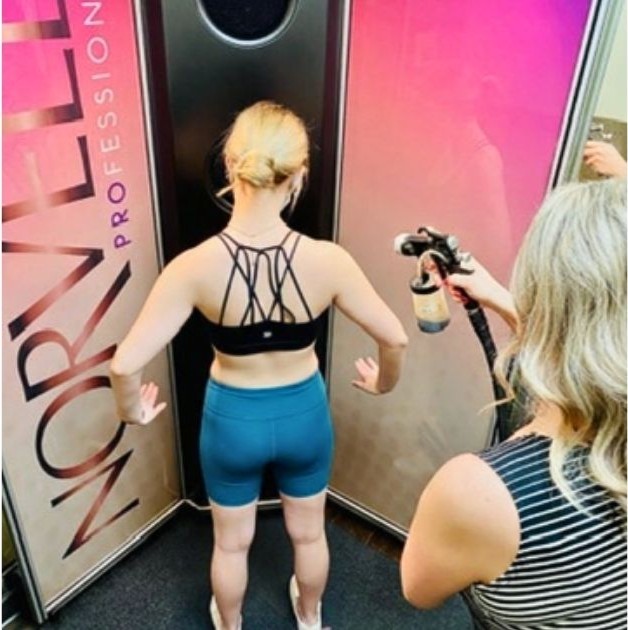
A professional spray tan uses DHA (dihydroxyacetone) to temporarily create color in the outermost layers of your skin. Unlike UV tanning, which develops gradually through your skin’s natural tanning response, spray tanning can provide noticeable cosmetic color in a single visit.
Most professional spray tans provide visible color for approximately 7–10 days, although results vary depending on your skin, preparation, application, aftercare, and lifestyle.
Good spray tan results begin before your appointment and continue after you leave. Proper skin preparation, choosing an appropriate solution and application method, allowing your color to fully develop, and caring for your skin afterward all contribute to how your finished tan looks and how evenly it fades.
Explore the Guide
Use the Guide below to jump directly to the spray tanning question you want answered.
Table of Contents
Spray Tanning at a Glance
Whether you’re preparing for vacation, a wedding, prom, family photos, a competition, or simply want to enjoy a healthy-looking glow year-round, spray tanning is one of the quickest ways to enhance your appearance without waiting weeks to gradually build a tan.
Today’s professional spray tanning solutions are formulated to create natural-looking color that complements your skin tone while fading gradually and evenly with proper care. They’re a far cry from the orange, streaky results many people remember from years ago.
At Sunsations Sun • Spray • Spa, we’ve helped clients achieve beautiful spray tan results since adding spray tanning in 2011. We believe that the best spray tan isn’t necessarily the darkest—it’s the one that looks the most natural on you. Every client’s skin, schedule, and desired outcome are different, which is why we take the time to recommend the right application method, shade, and aftercare routine for your individual goals.
Whether you choose the convenience of our automated spray tanning system or the personalized attention of a custom handheld spray tan, every application is performed by a Norvell-certified technician trained by Kelly Robbins, a certified Norvell University Instructor. Our goal is always the same: to help you leave feeling more confident, comfortable, and excited about your results.
Whether you’re completely new to spray tanning or looking to improve your results, understanding how spray tanning works and how to care for your skin before and after your appointment can make all the difference.
This guide will answer the questions we hear most often, explain how spray tanning works, help you prepare for your appointment, and show you how to enjoy longer-lasting, natural-looking color.
Why Do People Choose Spray Tanning?
People choose spray tanning for many different reasons, but most are looking for the same basic result: natural-looking color they can achieve quickly and predictably.
Unlike gradually developing a tan through UV exposure, a spray tan can create noticeable cosmetic color in a single visit. That makes spray tanning especially useful when you have a specific date or event in mind.
A Glow for Special Events
Weddings, proms, vacations, family photos, reunions, cheer and dance events, and other special occasions are some of the most common reasons people choose a spray tan.
For an important event, the goal usually isn’t simply to look darker. You want to feel confident in your clothing, like the way your skin looks in photos, and have color that complements your overall look rather than overpowering it.
This is also why darker isn’t always better. The right depth of color depends on your natural skin tone, what you’re wearing, the type of event, and the look you want to achieve.
Color Without the Wait
Developing a tan through UV exposure is a gradual process. Your skin needs time between exposures, and how quickly you develop color depends on factors such as your skin type, tanning history, and current level of pigmentation.
Spray tanning provides another option when you don’t have that time. Because the color is created on the surface of the skin rather than through the skin’s natural tanning process, you can achieve visible color much more quickly.
A UV-Free Tanning Option
Some people want the appearance of a tan but prefer not to use UV tanning at all. Others use spray tanning at certain times of the year or combine it with an existing tan when they want additional cosmetic color for a particular occasion.
There isn’t one tanning method that’s right for everyone. Understanding the differences between UV tanning and sunless tanning allows you to choose the method—or combination of methods—that best fits your goals, preferences, and timeline.
Confidence in Your Own Skin
Perhaps the most important reason people choose a spray tan is also the simplest: they like how they feel with a little color.
A natural-looking tan can complement an outfit, create a more even-looking appearance, and help you feel more polished for an event—or simply for everyday life.
At its best, spray tanning isn’t about looking like someone else. It’s about choosing the amount and style of color that helps you feel most like yourself.
How Does Spray Tanning Work?
Spray tanning creates temporary color on the outermost layer of your skin using an ingredient called DHA, or dihydroxyacetone. Understanding what DHA does—and what it doesn’t do—helps explain almost everything about how a spray tan develops, lasts, and fades.
What Is DHA?
DHA is the primary sunless tanning ingredient used in professional spray tanning solutions. When applied to the skin, DHA reacts with amino acids in the dead skin cells on the surface of the epidermis. This reaction gradually produces brown-toned compounds called melanoidins, creating the appearance of a tan.
This process takes time, which is why your final spray tan color isn’t immediate.
The color created by DHA is temporary because it exists primarily within the outermost dead skin cells. As those cells naturally shed, your spray tan gradually fades with them.
The Color You See Immediately Isn’t Your Finished Tan
One of the most confusing things for first-time spray tan clients is the color they see immediately after their appointment.
Many professional spray tanning solutions contain a cosmetic bronzer that provides immediate visible color. This helps you see where the solution has been applied and gives you an idea of your developing tan, but that bronzer is not the same thing as your final DHA-developed color.
During your first shower, much of the cosmetic bronzer washes away. Seeing brown-colored water during that shower is normal and does not mean your entire spray tan is washing off.
Your developed sunless color remains after the cosmetic bronzer has been rinsed away.
Why Does a Spray Tan Continue Developing?
The DHA reaction doesn’t happen instantly. Your color continues developing for several hours after the solution is applied.
This is why the time between your spray tan and your first shower matters. Showering too soon can interfere with the development process and may result in less color than expected.
The appropriate rinse time depends on the type of spray tanning solution used. Traditional and rapid-development solutions can have different rinse instructions, so following the instructions provided for your specific application is more important than following a universal number of hours.
Even after your first rinse, your color may continue to develop and settle into its final appearance.
Why Does a Spray Tan Fade?
A spray tan doesn’t permanently change your skin color. Because DHA creates color in the outermost layers of the skin, the tan gradually disappears as those skin cells naturally shed.
Anything that increases exfoliation can make the color fade more quickly. Long hot showers, frequent shaving, swimming, soaking, vigorous towel drying, exfoliating products, and some skincare ingredients can all affect how long your spray tan lasts.
This is also why good preparation and aftercare matter so much. Starting with evenly exfoliated skin and caring for it properly afterward can help your spray tan look more even as it develops and fades.
Does a Spray Tan Protect You From the Sun?
No. A spray tan should not be considered sun protection.
Having darker-looking skin after a spray tan does not mean your skin has developed the same natural pigmentation response that occurs with UV exposure. Unless a separate product specifically provides labeled sun protection, you should not assume that your spray tan protects your skin from UV exposure.
This distinction is especially important when spray tanning before a vacation or spending time outdoors. Looking tan and having developed natural pigmentation are not the same thing.
Automated vs. Custom Spray Tanning: What's the Difference?
Professional spray tanning can be applied in two primary ways: by an automated spray tanning booth or by a trained technician using handheld spray equipment.
Both methods use DHA-based sunless tanning solutions and can create beautiful, natural-looking color. The biggest difference isn’t necessarily the solution—it’s how that solution is applied and how much the application can be customized to you.
Understanding the differences can help you decide which experience best fits your comfort level, skin, desired result, and reason for spray tanning.
How Does an Automated Spray Tan Work?
An automated spray tanning booth applies solution using a programmed spray system. You enter a private booth and follow a series of simple positions while the system applies the selected solution across your body.
For many people, one of the greatest advantages of automated spray tanning is privacy. There is no technician in the room during the application, which can make the experience especially comfortable for clients who prefer complete privacy.
Automation also provides a consistent, repeatable application pattern and can make spray tanning quick and convenient. Modern professional systems may also include features designed to make the experience more comfortable, such as warmth or drying between application passes.
The limitation of automation is right in the name: the system is automated.
A booth cannot look at your skin and notice that one area is accepting solution differently from another. It cannot see an existing tan line and decide to blend it. It cannot visually compensate for differences in pigmentation or customize the application around the individual characteristics of your skin.
For many clients, that level of customization isn’t necessary. A quality automated spray tan may be exactly what they want.
How Is a Custom Handheld Spray Tan Different?
During a custom handheld spray tan, a trained technician applies the solution while visually assessing the application as it happens.
Instead of following one predetermined spray pattern, the technician controls the distance, speed, direction, and amount of solution being applied. The client can also be positioned differently throughout the application to help the technician reach different areas of the body evenly.
This allows the application to be adjusted based on what the technician actually sees.
For example, someone may have existing tan lines they would like softened, areas of uneven pigmentation, or parts of the body that accept sunless solution differently. A trained technician can recognize those differences and adjust the application rather than treating every area exactly the same.
Custom application can also allow for more intentional blending and contouring when appropriate.
Choosing the Right Solution Is Part of Customization
Customization doesn’t begin when the spray gun turns on.
A professional spray tan should start with a conversation about your skin and the result you’re trying to achieve.
At Sunsations, we consider factors such as your natural skin type, existing color, desired outcome, tan lines, and characteristics such as age spots, fine lines, or uneven areas when determining which solution and application approach may be most appropriate.
Sometimes the best result isn’t simply achieved by choosing a darker solution. Different skin characteristics may benefit from a different depth of color or from solutions that incorporate additional skincare ingredients.
The goal is not to make every client the same shade. It’s to select and apply color that works with the person standing in front of us.
Why Does Technician Training Matter?
A handheld spray tan is only as customized as the person applying it is capable of making it.
Application technique matters. Holding spray equipment too close or too far away, moving too quickly or slowly, spraying from an inconsistent direction, or positioning the client poorly can all affect how evenly solution reaches the skin.
That is why professional education and hands-on experience are important.
At Sunsations, technicians begin with Norvell spray tanning education before moving into one-on-one hands-on training with Kelly Robbins, a certified Norvell University Instructor. New technicians then complete a series of practice applications and assessments before progressing into regular custom spray tanning appointments.
That process gives technicians an opportunity to develop consistency in distance, speed, spray direction, positioning, and visual assessment—not simply learn how to operate the equipment.
Is Automated or Custom Spray Tanning Better?
Neither application method is automatically “better.” They solve different needs.
An automated spray tan may be a great choice if you value privacy, speed, consistency, and convenience and don’t need significant customization.
A custom handheld spray tan may be worth considering when you want more personalized attention, have existing tan lines or uneven areas you’d like addressed, want customized blending or contouring, or simply prefer having a trained technician evaluate the application as it happens.
The solution matters, but so does the application.
Understanding both gives you the ability to choose the experience that best matches the result you want.
How Should You Prepare for a Spray Tan?
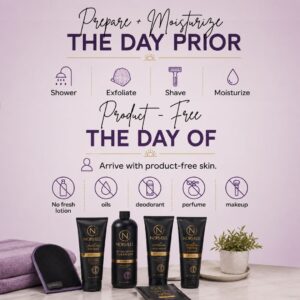 Great spray tan results begin before the solution ever touches your skin.
Preparing your skin properly helps the solution apply more evenly, develop more consistently, and fade more naturally. Many of the spray tan problems people blame on the solution or application actually begin with what happened to the skin before the appointment.
The goal is simple: arrive with clean, evenly exfoliated, product-free skin—but don’t aggressively scrub or shower immediately before your appointment.
Exfoliate Before Your Spray Tan
Because DHA develops color in the outermost layers of your skin, beginning with an evenly exfoliated surface is important.
Gently exfoliating removes loose, dead skin cells that are already preparing to shed. If some areas have more dry or dead skin buildup than others, they may absorb the tanning solution differently and can contribute to uneven or blotchy-looking results.
Pay particular attention to naturally dry or rough areas such as your:
elbows
knees
ankles
feet
You don’t need to aggressively scrub your skin. The goal is even exfoliation, not removing every possible layer of skin.
At Sunsations, we prefer a simple exfoliating mitt with a pH-balanced cleanser rather than a harsh scrub or heavily fragranced product.
Don’t Save Your Shower for Right Before Your Appointment
This is one of the most common preparation mistakes we see.
People understandably think, I’m getting sprayed—I should shower and scrub immediately beforehand.
Freshly showered doesn’t necessarily mean better prepared.
At Sunsations, we generally recommend completing your shower, gentle exfoliation, and shaving the day prior to your spray tan rather than immediately before your appointment. After your shower, you can apply your normal moisturizer and allow it to absorb into your skin.
On the day of your appointment, avoid applying fresh lotion, body oils, makeup, perfume, deodorant, or other products that may leave a barrier on the skin before your spray tan.
Avoid harsh cleansers, heavily fragranced products, oils, or aggressive skin-preparation methods.
From Our Experience: We’ve even had a first-time client use rubbing alcohol on her skin before an appointment because she wanted to make sure she was completely clean. That’s definitely not necessary—and is a perfect example of how trying to over-prepare can work against the result you’re trying to achieve.
Clean skin is good. Stripped or irritated skin is not the goal.
Shave Before—Not Immediately Before—Your Spray Tan
If you plan to shave, do it before your spray tan and preferably as part of your advance preparation rather than immediately before your appointment.
Shaving exfoliates the skin in addition to removing hair. Spraying immediately afterward can sometimes result in solution collecting around freshly shaved follicles, creating the appearance of tiny dark dots.
Shaving afterward can also shorten the life of your tan because each shave provides some exfoliation.
For the most even result, complete your shaving ahead of your appointment and avoid unnecessary shaving while you’re trying to maintain your color.
Schedule Waxing, Manicures and Pedicures Before Your Spray Tan
Think of your spray tan as one of the last beauty services you complete before an event.
Waxing should be completed before your spray tan so the process doesn’t remove newly developed color.
The same principle applies to manicures and pedicures. Soaking, scrubbing, exfoliating, lotions, oils, and massage can all affect a fresh spray tan—especially around the hands, feet, ankles, and lower legs.
If you’re planning several beauty appointments before a wedding, prom, vacation, photos, or another special event, schedule services that exfoliate, soak, wax, or heavily moisturize the skin before your spray tan.
What Should You Put on Your Skin Before Your Appointment?
Ideally, very little.
Arrive for your spray tan without products that may create a barrier between the solution and your skin. Depending on the product, this can include:
body lotion or oils
makeup
perfume
deodorant
heavily fragranced skincare products
If you’re coming directly from work or another activity and can’t arrive completely product-free, don’t panic. Tell your technician what is on your skin so they can help you determine what needs to be removed before your application.
What Should You Wear to Your Spray Tan?
Wear whatever makes you comfortable during the application while remembering one simple rule:
Whatever you wear may determine the tan lines you have for the next 7–10 days.
For a custom handheld application, your level of coverage is a personal choice. Think ahead about the clothing, swimsuit, dress, or outfit you’re preparing to wear and where you do—or don’t—want visible tan lines.
After the application, choose loose, comfortable clothing that minimizes rubbing against freshly applied solution.
Tight waistbands, leggings, bras, socks, or other clothing that presses or rubs repeatedly against the skin may interfere with the cosmetic bronzer or developing application before your first rinse.
A Simple Spray Tan Preparation Timeline
Several days before:
Plan waxing, manicures, pedicures, and other exfoliating or skin treatments.
The day prior:
Complete your shower, gentle exfoliation, and shaving. Afterward, you can moisturize as usual and allow the moisturizer to fully absorb.
The day of your appointment:
Avoid applying fresh lotion, body oils, makeup, perfume, deodorant, or other products that may interfere with the application. Arrive with clean, dry skin whenever possible.
When you leave:
Wear loose, comfortable clothing and follow the development and rinse instructions provided for the specific solution used.
The most important thing to remember is that more preparation isn’t always better preparation. Gentle, properly timed skin preparation gives your spray tan a much better foundation than aggressive last-minute scrubbing.
What Should You Expect During a Spray Tan Appointment?
If you’ve never had a spray tan before, it’s completely normal to have questions about what actually happens during the appointment.
What do you wear? Who chooses your color? How long does it take? Will someone be in the room? What happens after you’re sprayed?
While the experience differs slightly between an automated and custom handheld spray tan, a professional appointment should be comfortable, straightforward, and designed to help you understand what is happening before the application begins.
Your Appointment Starts With a Conversation
Before your spray tan, you’ll want to consider the result you’re hoping to achieve.
Are you preparing for a wedding or vacation? Do you want subtle color or a noticeably darker tan? Do you already have some natural or UV-developed color? Are there tan lines you’d like to minimize? Have you had a spray tan before—and if so, what did you like or dislike about the result?
For a custom spray tan at Sunsations, these are some of the factors a technician can consider when recommending a solution and depth of color.
Your skin itself can also provide useful information. Existing pigmentation, uneven areas, dryness, age spots, fine lines, and other skin characteristics may influence the solution or skincare enhancements we recommend.
The goal isn’t simply to choose “light, medium or dark.” It’s to understand the result you want and select an approach that makes sense for your skin.
You’ll Prepare in a Private Room
Before the application, you’ll have privacy to undress to your own comfort level and prepare for your spray tan.
What you wear during the application is your choice. Some clients wear underwear, a swimsuit, or other minimal coverage, while others prefer fewer or no tan lines.
Remember that whatever you wear during the application can create a tan line that remains visible for the life of the spray tan. If you’re preparing for a particular dress, swimsuit, costume, or outfit, think about where those lines will fall before your appointment.
Your technician can answer questions, but your level of coverage should always be based on what makes you comfortable.
Certain Areas May Need a Little Extra Protection
Hands, feet, elbows, knees, and other naturally dry areas can sometimes absorb sunless tanning solution differently than the rest of the body.
Depending on your skin and the application method, a technician may use barrier products or other preparation techniques on specific areas before spraying begins.
This isn’t about preventing those areas from tanning entirely. The goal is to help create a more natural transition so areas that tend to be dry or absorbent don’t become disproportionately dark.
What Happens During an Automated Spray Tan?
For an automated spray tan, you’ll enter the booth privately and follow the system’s instructions for a series of positions.
The booth applies the selected solution in programmed passes while you change positions as directed so the solution can reach the different areas of your body.
Because no technician needs to be present during the actual application, automated tanning is especially appealing to people who value privacy.
Professional automated systems may also provide warmth or drying features to make the experience more comfortable before you dress.
What Happens During a Custom Handheld Spray Tan?
For a custom handheld application, a trained technician remains in the room and guides you through a series of simple positions.
You don’t need to memorize poses or know what to do ahead of time. Your technician will tell you where to place your arms, legs, hands, and feet throughout the application.
As the solution is applied, the technician controls the distance and direction of the spray, the speed of each pass, and how much attention individual areas receive.
This is also where visual assessment becomes valuable. The technician can see how the application is laying on the skin and make adjustments when appropriate rather than relying on a predetermined spray pattern.
A professional custom application should feel methodical rather than rushed.
What Happens Immediately After You’re Sprayed?
Once the application is complete, the solution needs time to begin developing on your skin.
You may feel slightly damp or tacky at first. Allowing the application to dry before getting dressed helps minimize unnecessary rubbing or transfer.
This is also when the clothing you brought matters. Loose, comfortable clothing is generally the best choice while your tan develops. Tight clothing, restrictive waistbands, socks, bras, or anything that repeatedly rubs against freshly sprayed skin can disturb the cosmetic bronzer or application.
The color you see at this point may look considerably different from your finished tan. Remember that many solutions contain a cosmetic bronzer that provides immediate color while the DHA underneath continues developing.
Don’t judge your final result by how you look immediately after the application.
Before You Leave, Know Your Rinse Instructions
One of the most important parts of your appointment happens after the spraying is finished: understanding when and how to complete your first rinse.
Not every spray tanning solution follows the same schedule.
Traditional solutions and rapid-rinse solutions have different rinse windows, and the appropriate timing may also depend on the result you’re trying to achieve.
At Sunsations, we use professional Norvell solutions, including traditional and rapid-rinse options. Some rapid solutions may be rinsed within a shorter window based on the desired depth of color, while DHA development can continue after that initial rinse.
Your technician should explain the instructions for the specific solution used rather than leaving you to follow generic spray tan advice you find online.
Before leaving, make sure you know:
when you should complete your first rinse
whether that first rinse should include cleanser
when you can resume your normal shower routine
when you can exercise or swim
what products are recommended while your color develops
what to expect as the cosmetic bronzer rinses away
We’ll cover all of those questions in detail in the aftercare section of this Guide.
The Most Important Part: Ask Questions
A first spray tan shouldn’t require you to already know how spray tanning works.
If you’re uncertain about what to wear, when to shower, how dark to go, what solution is being used, or what you can do after your appointment, ask.
Professional spray tanning isn’t just about applying solution. Education before and after the application is part of getting a great result.
Spray Tan Aftercare: What Should You Do After a Spray Tan?
What you do during the hours and days after your spray tan can have a significant effect on how your color develops, how evenly it fades, and how long it lasts.
The two most important things to understand are:
Your spray tan continues developing after you leave your appointment.
Once developed, anything that increases skin exfoliation can shorten the life of your tan.
Good aftercare doesn’t need to be complicated. It simply means protecting the developing application at first and then treating your skin gently afterward.
Keep Your Skin Dry During the Initial Development Period
Until it’s time for your first rinse, try to keep your skin dry.
That means avoiding more than just the shower. Water contacting one area of your body while the rest remains dry can interfere with the cosmetic bronzer and developing application.
This is why clients often ask us:
“Can I do dishes?”
Not without thinking about your developing tan. Water splashing onto your hands, wrists, or stomach while the rest of your tan remains dry can create uneven areas.
During the initial development period, avoid activities that expose your skin to water or significant moisture, including:
showering before your recommended rinse time
washing dishes without protecting your hands and arms
swimming
hot tubs
heavy sweating
strenuous exercise
getting caught in the rain
If a small amount of water accidentally touches your skin, don’t aggressively rub the area.
When Can You Shower After a Spray Tan?
This is one of the most common questions we hear, and the answer depends on the solution used.
Some traditional spray tanning solutions require a longer period before the first rinse. Rapid-rinse solutions are specifically formulated so the cosmetic bronzer can be rinsed away sooner, sometimes within a window of approximately one to three hours depending on the solution and desired depth of color.
That doesn’t mean the tanning process is finished.
Norvell sunless color continues developing after the initial rinse, with the complete color-development process taking up to approximately 24 hours.
This distinction is important:
Your first rinse removes the cosmetic bronzer. It does not necessarily mark the end of DHA color development.
Always follow the rinse instructions provided for the particular solution used during your appointment rather than assuming every spray tan follows the same schedule.
What Should Your First Rinse Look Like?
Don’t be alarmed when you see brown-colored water during your first rinse.
Much of what you’re seeing is the temporary cosmetic bronzer washing away—not your entire spray tan disappearing.
Follow the instructions provided for your specific solution. Depending on your application, your first rinse may be intentionally simple, with a more complete shower and cleansing routine recommended after the full development period.
When drying your skin, pat rather than aggressively rub with your towel.
Your color may also look lighter immediately after the bronzer rinses away. Give the DHA time to continue developing before deciding whether your finished tan is dark enough.
Give Your Color Time to Fully Develop
One of the easiest mistakes to make is judging your spray tan too early.
The color immediately after application isn’t your final color. The color immediately after your first rinse may not be your final color either.
At Sunsations, we encourage clients to think of the first 24 hours as the complete development period.
Following the rinse instructions for your particular solution and avoiding unnecessary cleansing or exfoliation during that period gives the DHA time to finish developing.
This is one reason we generally recommend getting an important-event spray tan about two days before the event rather than the day of it.
It gives the color time to fully develop and allows you to complete a normal shower before getting dressed and ready for the occasion.
Choose Your Cleanser Carefully
Once you return to your normal shower routine, what you use on your skin matters.
Harsh cleansers, strong exfoliants, and products that leave your skin feeling stripped or dry can shorten the attractive life of your spray tan by increasing dryness or exfoliation.
At Sunsations, we frequently recommend a gentle, pH-balanced cleanser designed to work well with sunless tanning. Norvell’s body-cleansing products are one option we use and recommend, although other gentle products may also work well depending on their formulation.
A simple rule is useful:
If a product leaves your skin feeling tight, stripped, or unusually dry after your shower, it probably isn’t helping you maintain your spray tan.
Moisturize Regularly
Hydrated skin generally provides a better canvas for a spray tan as it fades.
Dry skin tends to flake and shed unevenly, which can make sunless color appear patchy sooner. Regular moisturizing helps keep the skin comfortable and can support a more even-looking fade.
Once you’ve completed the initial development period, use a moisturizer that works well with your skin and doesn’t leave it feeling irritated or excessively dry.
Consistency matters more than applying an enormous amount of product at once. Moisturizing regularly throughout the life of your tan is one of the simplest aftercare habits you can adopt.
Can You Work Out After a Spray Tan?
Not during the initial development period.
Exercise can introduce both sweat and friction—two things you want to minimize while your application is developing.
Once your tan has fully developed and you’ve resumed your normal shower routine, you can return to exercise. Keep in mind that frequent sweating, tight workout clothing, repeated showering, and friction may cause some areas to fade faster than others.
That doesn’t mean you have to stop exercising to maintain a spray tan. It simply explains why someone who works out heavily every day may experience a different fading pattern than someone who doesn’t.
Can You Swim After a Spray Tan?
Once your tan has developed, you can swim—but swimming may shorten its life.
Pools, hot tubs, prolonged soaking, and repeated water exposure can increase how quickly the outer layers of skin shed or become dry. Hot tubs can be particularly challenging because they combine prolonged soaking with heat.
If your spray tan is for a vacation, it’s helpful to have realistic expectations. Your color may not last as long through several days of swimming, ocean water, pools, showers, and towel drying as it would during a normal week at home.
That doesn’t mean you shouldn’t spray tan before vacation. It means vacation aftercare is different from everyday aftercare.
What About Shaving?
You can shave after your spray tan has developed, but remember that shaving is also a form of physical exfoliation.
Every time a razor moves across your skin, it can remove some of the outermost skin cells where your sunless color lives.
When possible, shave gently and only as often as needed. This is another reason completing your shaving before your appointment is an important part of preparation.
How Can You Make a Spray Tan Last Longer?
You cannot prevent a spray tan from eventually fading. Your skin naturally sheds its outermost cells, and the sunless color leaves with them.
You can, however, help it fade more gradually and evenly.
For longer-lasting results:
follow the rinse instructions for your specific solution
allow the full development process to occur
avoid unnecessary exfoliation
use a gentle cleanser
moisturize regularly
keep showers comfortable rather than excessively hot and long
pat your skin dry instead of aggressively rubbing
shave gently and only when necessary
understand that swimming, hot tubs, heavy exercise, and frequent showering may shorten the life of your color
The goal of good aftercare isn’t to make a temporary tan permanent.
It’s to protect your skin, allow the color to develop properly, and help your spray tan fade as naturally and evenly as possible.
How Long Does a Spray Tan Last?
A professional spray tan will typically provide visible color for approximately 7–10 days, although every person’s results are different.
Some people may notice fading sooner, while others can maintain attractive color longer. The length of your spray tan depends on your skin, preparation, application, aftercare, and lifestyle.
The important thing to understand is that a spray tan doesn’t suddenly disappear on a particular day. It gradually fades as the outermost layers of your skin naturally shed.
Why Do Spray Tans Fade?
As we explained earlier in this Guide, DHA creates color by reacting with amino acids in the outermost layers of your skin.
Those skin cells are temporary.
As they naturally shed and are replaced, the color created within them goes with them. This means that some amount of fading is expected and is part of how spray tanning works.
A well-prepared and well-maintained spray tan should ideally fade gradually rather than becoming noticeably patchy all at once.
What Determines How Long Your Spray Tan Lasts?
Several factors influence longevity.
Your skin condition:
Dry, flaky skin may shed unevenly and can cause color to appear patchy sooner. Skin that is properly exfoliated before the appointment and moisturized afterward generally provides a better foundation for an even-looking tan.
Your preparation:
Uneven exfoliation, shaving immediately before the application, or arriving with products on your skin can affect how evenly the solution develops from the beginning.
Your aftercare:
Gentle cleansing, regular moisturizing, and minimizing unnecessary exfoliation can help preserve your results.
Your lifestyle:
Frequent swimming, hot tubs, long showers, heavy exercise, repeated shaving, tight clothing, and other activities that increase moisture, friction, or exfoliation may cause your color to fade more quickly.
Your individual skin:
Not everyone’s skin sheds at exactly the same rate or responds to sunless tanning solution in exactly the same way. Two people receiving the same solution on the same day may not experience identical results.
Does Every Part of Your Body Fade at the Same Rate?
Not necessarily.
Different areas of your body experience different amounts of washing, friction, shaving, moisture, and skincare.
Your hands, for example, are washed repeatedly throughout the day.
Your face may be cleansed more frequently and exposed to skincare products containing ingredients that increase exfoliation.
Your legs may be shaved regularly.
Areas around clothing lines may experience more friction.
Because of these differences, it’s normal for some areas of a spray tan to begin fading before others.
Why Might a Vacation Spray Tan Fade Faster?
Vacation is one of the most popular times to get a spray tan—and also one of the environments most likely to shorten its life.
Swimming, sunscreen application, ocean water, pools, hot tubs, sweating, multiple showers, towel drying, and sand can all affect the outermost layers of your skin or create friction.
A spray tan can still be a great way to arrive at your destination with immediate color. Just understand that a week at the beach may produce a different fading timeline than a normal week at home.
Setting realistic expectations is part of planning a successful vacation spray tan.
Can You Extend the Life of Your Spray Tan?
Good aftercare can help your original color fade more gradually, but some people also choose to use a tan-extending moisturizer.
Tan extenders typically combine moisturizing ingredients with a small amount of DHA or other sunless tanning ingredients. Rather than simply preserving the original spray tan, they can gradually add a small amount of new color as the original application begins to fade.
This can help maintain a more consistent appearance between professional applications.
As with other aftercare products, choose a product formulated to complement sunless tanning rather than one that aggressively exfoliates or dries the skin.
When Is It Time for a Fresh Spray Tan?
You may still see some remaining color beyond 7–10 days, but trying to preserve an old spray tan indefinitely isn’t necessarily the goal.
Eventually, your skin needs to shed the cells holding the remaining color. Continuing to layer new sunless product over an old, unevenly fading tan can sometimes make the result less uniform rather than more.
When your spray tan has reached the end of its attractive life, allow the remaining color to fade and gently exfoliate before your next full application.
A fresh, evenly prepared canvas usually produces a better result than trying to hold onto every last bit of old color.
What Should a Good Spray Tan Look Like as It Fades?
We believe the quality of a spray tan should be judged by more than how dark it looks immediately after application.
How it fades matters too.
A good spray tan should transition gradually as your skin naturally sheds. Proper preparation, an appropriate solution and application, and good aftercare all contribute to that process.
You cannot stop a spray tan from fading—and you shouldn’t need to.
The goal is beautiful color while it’s there and a natural-looking transition as it leaves.
Common Spray Tan Mistakes—and How to Avoid Them
When a spray tan doesn’t turn out as expected, it’s easy to assume something went wrong with the solution.
Sometimes application is the problem. But after years of working with spray tan clients, we’ve found that many disappointing results can be traced to something that happened before the appointment or while the color was developing.
Understanding the most common mistakes—and why they matter—can help you avoid them.
Mistake #1: Showering and Scrubbing Right Before Your Appointment
This is one of the most common mistakes we see.
It sounds logical: you’re about to have tanning solution applied to your skin, so you take a hot shower, shave, scrub thoroughly, and arrive as freshly cleaned as possible.
But as we explained in the preparation section, freshly stripped skin isn’t necessarily well-prepared skin.
Aggressive cleansing and exfoliation immediately before your appointment can leave your skin dry, irritated, or temporarily altered from its normal surface condition.
What to do instead: Complete your final shower, gentle exfoliation, and shaving the day prior to your appointment. This gives your skin time to settle after your preparation routine rather than arriving freshly scrubbed, shaved, or irritated.
And skip extreme preparation methods. You definitely don’t need rubbing alcohol.
Mistake #2: Not Exfoliating Evenly
Skipping exfoliation entirely can cause problems too.
DHA develops color in the outermost skin cells. Areas with an uneven buildup of dry, shedding skin may accept and release color differently than smoother areas.
The result can be a tan that appears darker in some places or becomes patchy as it fades.
What to do instead: Gently exfoliate your entire body before your appointment, paying particular attention to dry areas such as elbows, knees, ankles, and feet. The goal is an even skin surface, not aggressive scrubbing.
Mistake #3: Shaving Immediately Before Your Spray Tan
Shaving doesn’t just remove hair—it also exfoliates the surface of your skin.
Applying spray solution immediately afterward may cause solution to collect around freshly shaved follicles, sometimes creating the appearance of small dark dots.
What to do instead: Make shaving part of your advance preparation rather than something you do immediately before walking into your appointment.
Mistake #4: Scheduling Your Pedicure After Your Spray Tan
A fresh pedicure and a fresh spray tan don’t always play nicely together.
Pedicures can involve soaking, exfoliating, scrubbing, oils, lotions, and massage—all things that can remove or disturb newly applied sunless color on the feet, ankles, and lower legs.
The same principle applies to other beauty services that wax, soak, exfoliate, or heavily moisturize the skin.
What to do instead: Schedule manicures, pedicures, waxing, and exfoliating skin treatments before your spray tan. Think of the spray tan as one of the final beauty services you complete before your event.
Mistake #5: Arriving With Products on Your Skin
Lotions, oils, perfume, deodorant, makeup, and other skincare products can sometimes create a barrier between your skin and the tanning solution.
That doesn’t mean every trace of every product guarantees a poor result, but arriving with a heavily coated skin surface can make even application and development more difficult.
What to do instead: Moisturize normally after your preparation shower the day prior. On the day of your spray tan, avoid applying fresh lotion, oils, or other products that may create a barrier between your skin and the tanning solution. If you do have a product on your skin, tell your technician rather than aggressively scrubbing it off immediately before your appointment.
Mistake #6: Assuming Darker Is Always Better
Choosing the darkest available solution doesn’t automatically create the best-looking spray tan.
Your natural skin type, existing color, desired result, skin characteristics, and the occasion you’re preparing for should all influence how much color makes sense.
Going significantly darker than your skin can naturally support may create a result that looks less natural or develops differently than you expected.
What to do instead: Choose your solution based on the result you’re trying to achieve—not simply the darkest option available.
This is one of the areas where professional consultation can be particularly valuable.
Mistake #7: Getting Wet While Your Tan Is Developing
You remembered not to shower—but then you washed dishes, worked out, walked through the rain, or splashed water on your hands.
Your developing tan doesn’t know the difference between shower water and dishwater.
Moisture contacting only part of the body during the initial development period can disturb the cosmetic bronzer or application and contribute to uneven areas.
What to do instead: Keep your skin as dry as practical until your recommended first rinse. Avoid swimming, heavy sweating, washing dishes without protecting your hands and arms, and other activities that expose only portions of the developing tan to water.
Mistake #8: Judging Your Color Too Soon
Immediately after your appointment, you may think:
I’m really dark.
Then you complete your first rinse and think:
Where did my tan go?
Neither moment necessarily represents your finished color.
The immediate color may include cosmetic bronzer, much of which rinses away. Meanwhile, the DHA-developed color underneath may continue developing for many hours.
What to do instead: Follow your specific rinse instructions and allow the complete development period before judging your finished color.
Mistake #9: Using Harsh Products Afterward
Your skincare routine can affect how your spray tan fades.
Products that aggressively exfoliate or leave your skin feeling dry and stripped may accelerate the loss of the outermost skin cells holding your sunless color.
What to do instead: Choose gentle cleansing products and moisturize consistently. If you’re trying to extend your color, a properly formulated tan extender containing moisturizer and a small amount of DHA may also help maintain a more gradual transition as your original color fades.
Mistake #10: Expecting Swimming, Hot Tubs and Vacation to Have No Effect
You can absolutely enjoy your vacation with a spray tan.
But pools, ocean water, hot tubs, sand, sunscreen application, repeated showers, towel drying, sweating, and shaving can all affect how quickly your color fades.
What to do instead: Go into a vacation spray tan with realistic expectations. Follow good aftercare, moisturize consistently, and understand that your tan may fade faster during an active beach or pool vacation than it would during a normal week at home.
Mistake #11: Waiting Until the Last Minute to Decide How You Want to Tan
A wedding, important photo session, competition, or other major event isn’t the best time to experiment with something completely new.
If you’re considering a spray tan, Sunsations generally recommends completing a trial spray tan about two weeks before your event when possible. This gives you an opportunity to see how the color looks on your skin, decide whether you’d prefer a different depth of color, and determine whether you need to adjust your makeup or other beauty choices.
If you’re still deciding between a spray tan and gradually developing a UV tan, start planning earlier. UV tanning is a gradual process, and the amount of time needed to develop color varies based on your skin type, existing pigmentation, tanning history, and recommended exposure schedule. Give yourself enough time to build color gradually rather than trying to compress the process immediately before an event.
Once you’ve chosen spray tanning for the event, we generally recommend your final application about two days beforehand. This allows time for the color to fully develop and gives you a day to complete a normal shower and prepare before the event.
What to do instead: Decide how you want to achieve your color well before an important event. If you’re unsure which approach fits your timeline and goals, ask a trained tanning professional for guidance rather than waiting until the final few days.
Mistake #12: Assuming Every Uneven Spray Tan Is Your Fault
Preparation and aftercare matter—but application matters too.
Poor application technique can create streaking, oversaturation, missed areas, or uneven color regardless of how carefully you prepared.
With handheld spray tanning, distance, speed, spray direction, client positioning, and application consistency all matter. With automated tanning, correct positioning and following the booth instructions are important.
What to do instead: Choose professional equipment, quality solutions, and trained technicians. If something about your result doesn’t look right, ask questions rather than assuming spray tanning simply “doesn’t work” for your skin.
Good Spray Tanning Is a Partnership
A professional spray tan has several parts working together:
good preparation + appropriate solution selection + good application + proper development + good aftercare
No single step can completely compensate for problems in all the others.
That’s why education matters. When you understand what your skin needs before, during, and after a spray tan, you become an active part of creating the result rather than simply hoping for the best.
Frequently Asked Questions About Spray Tanning
Most professional spray tans provide visible color for approximately 7–10 days. Your individual results depend on your skin, preparation, aftercare, and lifestyle. Swimming, hot tubs, frequent shaving, exfoliation, and repeated long showers may cause your color to fade faster.
It depends on the solution used. Traditional and rapid-rinse solutions have different instructions. Some rapid solutions can be rinsed within approximately 1–3 hours, while the DHA color may continue developing for up to approximately 24 hours. Always follow the rinse instructions provided for your specific spray tan.
Don’t panic. Much of the brown color you see in the water is the cosmetic bronzer applied with the spray tanning solution. It is designed to rinse away. Your DHA-developed sunless color remains in the outermost layers of your skin and may continue developing after that first rinse.
Wear whatever makes you comfortable while remembering that whatever you wear may create tan lines for the next 7–10 days.
For a custom handheld spray tan, some clients wear underwear, a swimsuit, or minimal coverage, while others prefer fewer or no tan lines. Your level of coverage is a personal choice.
Choose loose, comfortable clothing that minimizes rubbing while your tan develops. Tight waistbands, leggings, bras, socks, and other restrictive clothing can rub against freshly applied solution.
Yes—but not immediately beforehand. At Sunsations, we generally recommend completing your final shower, gentle exfoliation, and shaving about 12 hours before your appointment.
If you plan to shave, do it ahead of your appointment rather than immediately beforehand. Shaving exfoliates the skin, and spraying freshly shaved skin can sometimes contribute to small dark dots around the follicles.
Avoid strenuous exercise and heavy sweating during your initial development period. Once your tan has fully developed and you’ve resumed your normal shower routine, you can exercise normally, although frequent sweating, friction, and showering may cause the color to fade faster.
Yes, after your color has developed—but swimming can shorten the life of your tan. Pools, hot tubs, ocean water, prolonged soaking, towel drying, and repeated showers can all contribute to faster fading.
It’s best to avoid getting your hands, wrists, or other areas wet before your recommended first rinse. If you must wash dishes while your tan is developing, protect your hands and arms from water.
A professional spray tan shouldn’t automatically mean orange color. The finished result can be influenced by the solution selected, your natural skin tone, skin preparation, application, and how dark you’re trying to go.
Choosing an appropriate solution and depth of color is one reason professional consultation can be valuable.
Neither is automatically better.
An automated spray tan offers privacy, convenience, and a consistent programmed application.
A custom handheld spray tan allows a trained technician to visually assess your skin and adjust the application for factors such as existing tan lines, uneven areas, blending, and desired results.
The best choice depends on your skin, goals, comfort level, and how much customization you want.
For an important event, Sunsations generally recommends your final spray tan about two days beforehand so your color has time to fully develop and you can complete a normal shower before the event.
If you’ve never spray tanned before, consider doing a trial approximately two weeks earlier so you can see how the color looks on your skin and make adjustments if desired.
If you’re still deciding between spray tanning and gradually developing a UV tan, begin planning earlier because UV color develops gradually and varies according to your skin type and tanning history.
No. A spray tan creates cosmetic color but should not be considered sun protection. Unless you are separately using a product specifically labeled to provide sun protection, don’t assume darker-looking skin from a spray tan protects you from UV exposure.
Follow your specific rinse instructions, avoid unnecessary exfoliation, use a gentle cleanser, moisturize regularly, pat rather than aggressively rub your skin dry, and understand that shaving, swimming, hot tubs, heavy exercise, and frequent showering may shorten the life of your color.
A sunless tan extender containing moisturizer and a small amount of DHA can also help maintain color as your original spray tan begins to fade.
Why Trust Sunsations for Spray Tanning?
At Sunsations Sun • Spray • Spa, we’ve offered professional spray tanning in Topeka since 2011. Over the years, we’ve learned that consistently beautiful spray tan results require more than good solution and good equipment. They require education, proper preparation, thoughtful solution selection, skilled application, and good aftercare.
Sunsations uses professional Norvell sunless tanning solutions and offers both automated and custom handheld spray tanning. Rather than assuming every client needs the same shade or application, we consider factors such as your natural skin type, existing color, desired result, tan lines, and individual skin characteristics when helping you choose an option.
Our custom spray tanning technicians begin with Norvell spray tanning education and receive hands-on training with Kelly Robbins, a certified Norvell University Instructor. Technicians then complete practice applications and additional assessments as they develop their application skills.
That training matters because custom spray tanning isn’t simply knowing how to operate a spray gun. Distance, speed, spray direction, positioning, visual assessment, blending, and understanding how different skin characteristics may affect the finished result all contribute to the application.
Most importantly, our philosophy hasn’t changed:
The best spray tan isn’t necessarily the darkest. It’s the one that looks the most natural on you.
Our goal is to help you understand your options, make an informed choice, and know how to care for your color before you ever leave the salon.
Ready to explore your options?
Learn more about professional spray tanning at Sunsations, including our automated and custom handheld spray tan services.
The Sunsations Standard
At Sunsations, we believe great results begin with education.
Whether you choose spray tanning, UV tanning, or another service, you should understand how it works, what to expect, and how to make choices that fit your skin, your goals, and your lifestyle.
For spray tanning, that means looking beyond simply choosing a shade. Proper skin preparation, quality professional solutions, thoughtful color selection, skilled application, full development, and good aftercare all work together to create a beautiful result.
After providing professional spray tanning in Topeka since 2011, one principle continues to guide us:
The best spray tan isn’t necessarily the darkest. It’s the one that looks the most natural on you.
Our standard is to educate first, listen to what you’re trying to achieve, and use our training and experience to help you choose the approach that’s right for you.
Because feeling confident in your color starts with understanding it.
ABOUT THIS GUIDE
Reviewed by: Kelly Robbins
Owner, Sunsations Sun • Spray • Spa
Certified Norvell University Instructor
Vice Chair, Kansas Board of Cosmetology
Professional experience: Sunsations has provided professional spray tanning in Topeka, Kansas since 2011.
Last reviewed: August 2026
Next review: August 2027